
Haruka Sassa: "For me, happiness and calm are the best source of inspiration"
Japanese dancer Haruka Sassa’s path to Berlin was anything but planned. After years in Japan, the United States, Sweden and Norway, she arrived at Staatsballett Berlin almost spontaneously — first as a soloist, and soon after as a principal dancer.
In this conversation, Haruka speaks openly about cultural differences, the work ethic in different countries, the importance of joy in ballet training, and why discipline should never destroy a child’s love of dancing. She reflects on injury, her return to the stage, the roles she dreams of dancing, and the delicate balance between classical ballet, contemporary work and life outside the theatre.
Above all, this interview reveals an artist who does not separate technique from humanity. For Haruka Sassa, dancing is not only about perfection — it is about connection, presence, curiosity, and the ability to live someone else’s life on stage.

“I came to Berlin very spontaneously”
You came to Berlin three years ago. How did it happen?
It happened very spontaneously. Before coming to Berlin, I was in Scandinavia for a while, a year in Norway, and before that, five years in Sweden.
Having trained and worked in Japan and the US, I grew up in an environment where there was strong competition in the studios. It was not always a healthy environment, but this really pushed me and helped me to grow. It also made me realise that there’s always room for improvement. I really appreciate the teachers I’ve met.
While I deeply respected the supportive and balanced atmosphere in Norway, I realised that I missed that specific energy or the drive that naturally encourages me to strive for a higher artistic level. I realised I don’t do so well in a "comfortable" environment. Maybe I was struggling to push myself, or I was a bit stuck looking for inspiration, blocking myself without realising it… something felt disconnected inside me back then.
I started looking around to see if there were any opportunities for me to audition elsewhere, hoping to find something that would challenge me. Then I saw that the Staatsballett Berlin was looking for principal dancers. Christian Spuck was about to take over the company from the upcoming season. I had just worked with him in Norway on his Sleeping Beauty, so I talked to Christian about how I was feeling at that moment, and he gave me a chance to audition for the company.
It wasn’t that company was always on my list. Honestly, I never imagined myself here — it was more like a dream company. I always thought: "This is such a big company. It’s not for me." The timing of everything was just very fortunate. Sometimes things just happen like that.
Can you tell us more about your audition in Berlin?
Yes. Christian already had worked with me for a short time in Norway, but he needed the other ballet masters to see me. So I came to Berlin and took a class with the company. I didn’t get an answer immediately so I went back to Norway and had to wait.
Christian was very honest with me. On the website, they stated that they were looking for principals, but he told me: "Look, I cannot give you a principal contract. Are you willing to consider a soloist contract?" It was a step down in rank for me, but I was very grateful for the opportunity. I just wanted to try something new. I took the contract as a soloist, spent one season with the company, and then I was promoted to principal. Somehow it happened quickly.

Sleeping Beauty by Christian Spuck with Norwegian National Ballet, photo Erik Berg
“For this art form, you need discipline”
You mentioned that the work atmosphere in Norway was difficult for you. In Northern countries, life can be very comfortable, but maybe for ballet it can be too relaxed?
Exactly. Life there is really nice. People are super friendly, happy, and very organised. But for this art form, I felt that I was missing a bit of a push, personally. Perhaps this comes from my education. As dancers, we are always striving for perfection, even though we know we will never achieve it. But that search is how we keep growing. Even when you become a principal dancer, it’s not the end. It’s just another starting point and we always want to keep growing as a person, as an artist, and technically.
As for Sweden, I loved Stockholm. It’s such a beautiful city — vibrant, with the archipelago and the islands. The winters were rough but the summers were absolutely beautiful, it makes me smile just thinking about it. But in Oslo, somehow life felt a bit more difficult. I missed the vibrancy of Stockholm, and mentally I was having a hard time.
In Berlin, I feel happier. People complain that the winter is long and grey here too, but compared to Scandinavia, it is not too bad for me. In Berlin, I feel like the city is truly alive. There is always something happening. I enjoy it here.
What made Berlin comfortable for you personally?
I feel like everyone is welcome here. Coming from Tokyo, where I feel like people judge you much more — how you dress, how you behave — Berlin feels very free. In Tokyo, there are many unspoken rules. Here, you can just be yourself. No one judges you, and I also don’t judge anyone either. Some things were a shock during the first week here, but somehow I feel good here.
Of course, Berlin has other problems. The weather, public transit, cleanliness… Japan is the king of hygiene, and Norway and Sweden are also very clean. But nowhere is perfect. There is always something you have to compromise on.
“I was grateful that Christian gave me opportunities”
When you spoke with Christian Spuck before joining Staatsballett Berlin, did he tell you which productions or roles he had in mind for you?
Honestly, I was just so happy that I was starting a new chapter so I didn’t ask many questions. I was simply grateful that he took me in.
He gave me many opportunities in my first year. I had the chance to show what I could do, to dance a lot, and to work with him on his own choreography. That was a lot of fun. It also felt easy to be part of the company because everyone was very nice. I really appreciate the good atmosphere here. Not only is everyone very supportive, but there is also healthy competition. We inspire each other and challenge each other. It is not the kind of competition that puts you down.
When I get to dance in Japan, I do feel more appreciated by the audience because people know me from when I was dancing with Tokyo City Ballet. It feels like home. I can dance for my family and friends too. That is something I miss in Berlin. But I haven’t been here for such a long time yet, so maybe eventually I will feel more at home here too.

Haruka Sassa in Symphony in C. Staatsballett Berlin, photo by Carlos Quezada
“Children should not lose the joy of dancing”
In Russia, ballet training has a reputation for being extremely strict. What do you think is the best method for teaching children?
For me, everything started with just dancing to the music. I think I started with musicality — learning how to feel the music, how to have fun, and how to enjoy dancing. I actually started with hip-hop and only later shifted to ballet. So my entrance into the ballet world was rooted in joy and music.
My ballet teacher respected that. Of course she provided guidance on how to do the steps, but I remember always wanting to fit everything I learned into the music. Even if my timing was wrong she didn’t crush my spirit. She acknowledged the way "I" heard the music, while nicely guiding me to see that there was another way of listening to it.
I think this is so important, because this profession is extremely hard no matter what repertoire you dance. You will always face some kind of a wall. For me, when I feel myself merging into the music, this gives me joy. Sharing that with the audience, especially with a live orchestra, means the world to me. I think that comes from my childhood. My mother played piano, so I was always close to music.
Of course, discipline has to be there. But as a Japanese person, discipline is something instilled in us from a very young age. We are taught to be polite, to respect others, and to cooperate. So, perhaps culturally it is easier for us to understand discipline, or simply comes more naturally.
But at the same time, it is very important to have fun and explore. Ballet is an art form. It is beautiful. If we don’t feel the joy while dancing, it is very hard to convey that to the audience. I don’t think people come to the theatre to see us suffering on stage. When I don’t feel present on stage, it is usually because I am too nervous. Then instead of living the moment, I am worrying, I am not really inside the music or the role. This is a feeling I really dislike.

“Even when I don’t love a piece, I look for connection”
How do you deal with dancing pieces you don’t really like? As a dancer, you still have to perform them.
I find a lot of importance in connection. Most of the time, you are dancing with someone. Even if it is a piece I don’t particularly enjoy, there are always people around me. So I try to enjoy the feeling of dancing with them — the unity, the eye contact, the sense that we are doing something together.
If it is a solo, then I appreciate the opportunity. The fact that someone picked me to do that solo is a significant honour. So with solos, even though I won’t be sharing the stage with anyone, I feel deeply connected to the piece.
Do you feel joy simply from the fact that your body can move and do these amazing things?
Yes, I think it is such a joy. I love ballet classes also. It is not so difficult for me to come to the theater and start the day with the class. I especially love the barre. I hear some people find it boring, but for me it is almost like meditation. I am checking in with my body: how do I feel today?
My motivation flows naturally from those barre exercises. Once you finish the barre, you move to the center, and by then you are up and running. Of course, when your body is aching a lot, a day off is nice. But usually I actually feel worse if I take two days off. My muscles are naturally very soft so if I take many days off, I have a hard time engaging and feeling my body. I usually go to the studio and do a simple class on my days off for these reasons.

“The injury taught me how much I love dancing”
Do you continue training during vacations?
Often the summer break is actually quite busy for me. I usually go back home to Japan, where there are always lots of galas happening during the summer because dancers who are based abroad come back. Thankfully, I get invited to those galas, which gives me beautiful opportunities to dance there.
After those shows, if I have one or two weeks off, I take several days off to refresh and enjoy being with my family or explore countries where I’ve never been to before. But before the season starts, I do exercises from my personal trainer and slowly get back.
Speaking of the joy of dancing, I was injured last year. I was off for almost a year. Because it’s not the kind of injury that heals on its own, it is something I still manage, but with a lot of support and training, I’m able to dance again.
I am not grateful that I got injured, of course, but I am grateful for the opportunity to reflect on so many things. I learned so much, it was such a powerful lesson. Now I experience even more joy when I dance, because there were moments during that time when I thought about giving up.

When did you come back on stage?
I returned to the stage in Berlin with Swan Lake. It was a massive mountain for me to climb. Before that, I did a few galas to get over the feeling of being away from the spotlight. It wasn’t exactly stage fright, but after almost a year away, coming back to do full length Swan Lake felt huge. I really appreciate Christian for trusting me with this.
The doctor pulled me off the stage in January 2025 after an MRI, and I came back on stage in October of that year. During the rehab, the days felt long. But looking back now, it was just another page in the chapter, and life just continues.
Are you dancing everything now?
I am back, but I still have to be smart. This season, I decided to come back slowly to classical repertoire because my rehabilitation was focused on that. With my injury, there are certain movements I cannot do right now, especially internal rotations. So I knew it wouldn’t be wise to jump immediately into contemporary works without knowing my current limits.
My personal trainer, physiotherapists and I talked a lot about how to come back into company work. We felt it would be better to rebuild my strength and muscle through classical technique first, and then, starting next season, I will try to return to everything. Again, this is all possible because of the understanding and the support of the people around me.

Haruka and David Soares. Margot and Nureyev. Photo by Leszek Januszewski
“Contemporary work is always a discovery of yourself”
Berlin has a lot of contemporary and neoclassical repertoire. Do you enjoy that side as well?
Yes, I enjoy contemporary and neoclassical work. It always feels like a journey of self-discovery.
Classical ballet has a form. The question is how correctly you can do it, how much freedom you can find in the upper body, how you tell a story. There are many layers. But in contemporary work, you can discover yourself differently. It is always interesting to do that kind of repertoire.
Does it sometimes feel hard because the movement is unexpected or against the music?
It can be hard. But I’ve had many interesting and memorable experiences in Berlin, for example, I really enjoyed working with Sol León on Stars Like Moths. It was a very intimate piece, and I really appreciated the process. There were many conversations, many details. It was very beautiful. The whole team felt like one family.
Working with William Forsythe was an absolute joy. He always challenges you: "Can you do this? What if you try that?" He is always curious about movement, musicality, and what we are capable of. As a result, the piece becomes exciting because everyone is pushing their limits and challenging each other. The piece feels alive and we continue to grow through every performance.
With Christian Spuck’s pieces, I also enjoy the connection with other dancers. He allows us to really look at each other. In classical ballet, you often have to keep everything very controlled, but he says: "Look at the girls, look at the boys, be together." It is like a silent conversation on stage. You are always asking without words: "What are you going to do? Okay, now you move." That creates a team feeling. It is different every time.

Alexander Ekman’s Eskapist at Royal Swedish Ballet, photo by Nils Emil Nylander
“With a new creation, you never know until the last moment”
In opera, singers have the score, so they know what they need to learn. But in choreography, especially a new creation, when do you feel that you know the piece?
With a new creation, you never really know. You never know until the last moment. It can be stressful because you don’t know what the final structure will look like.
The choreographer has an initial idea, but they sometimes work on instinct. They don’t always share everything with us right away. Along the way they might think: "Maybe I should add this, or maybe cut that." For us as dancers, I think the most important thing is to simply stay open.
I try not to go with any expectations. For me, that is the best way to stay grounded and relaxed.
Do dancers usually watch productions from the audience when they are also dancing them?
Some people do, but I personally don’t like to watch a show from the audience when I know I will be dancing it soon. I get nervous and I just can’t enjoy it.
For example, I went to watch my colleagues in Sleeping Beauty. I adore them, and I wanted to enjoy their performance, but my body reacted to the music as soon as it started. During Aurora’s entrance, I was sweating everywhere, even though I wasn't the one on stage. My body and brain freak out when I hear the music if I’m not "warm."
But I love watching rehearsals. Sometimes I come in early just to watch someone else’s rehearsal. I like listening to what the dancers are thinking, how they speak to their partner, what kind of corrections they receive. I learn a lot that way.
“Opera fascinates me because singers become the instrument”
Do you go to the opera?
I have been to several operas. It is fascinating. I get goosebumps whenever I go. I think: "Wow, a human can do this?"
The way singers act is also very different. We share the same stage, but our art forms are very different, and I find it very interesting. What they do with their bodies — they become the instrument. That is really amazing.

“I learned not to take everything personally”
In opera, especially in works like Madama Butterfly, there are often cultural stereotypes. As a Japanese artist, how do you look at that now?
I was born and raised in Japan, but then my family moved to the United States when I was in middle school because of my father’s job. We lived in Michigan. I didn’t speak English at all.
It was a big culture shock. Everything was different. I could see how waiters or waitresses sometimes treated us differently, almost dismissively. I saw my mother being treated like that too, and I remember thinking: "This is sad. Is it just because we are Asian?"
But at the time, I didn’t take it personally. I just thought: "Maybe this is just how things are."
Growing up in Japan, there is a tendency to look up to the Western world. That mindset definitely still exists. So o didn’t really question what we experienced in the US, I assumed it was supposed to be that way.
Now, of course, I understand that it was wrong. We should be proud of our culture. Japan is a fantastic country. But back then I didn’t know any better. That experience helped me not to take things too personally or too seriously. Now when I see certain outdated themes in art or historical works, I usually just think: "That was how people thought back then." I don’t let it affect me personally.

“Europe taught me to open my mind”
Was Europe also a cultural shock for you?
Yes. After America, I lived in Japan again for a while, and I never thought of moving to Europe. The only reason was language. I struggled with English, and I thought: “If I go to Europe, what language will I need to learn?” I didn’t want to deal with that.
Then several guest teachers came to Tokyo City Ballet and told me: "You should go to Europe." It was not just one person — I was told several times. So I thought: "Okay, what is in Europe?"
I came to audition in Dortmund because that was the only connection I had. I got in and I joined the company. When I arrived, there were almost no Germans in the company. It was very international.
There were some funny cultural differences. In Japan, everything is strictly on time. If someone says dinner is at 7, you arrive at 7. Once in Dortmund my friends told me that we would meet at 7 for dinner and they didn’t show up until nine! I was so confused and I asked: "Why did you say 7 if you were going to come at 9?" And they just laughed and said: "When we say 7, it usually happens around 9."
But then I realized: many countries are not strictly punctual, and yet society still functions. It is not the end of the world. I had to open my mind and accept things as they were. Europe taught me not to take everything so seriously.

Cinderella by Ben Stevenson with Norwegian National Ballet, photo by Jörg Wiesner
“Russian ballet is very appreciated in Japan”
In Europe, we often know about Tokyo Ballet or some Korean companies, but maybe we don’t really know what is happening in Asia.
I also don’t know so much about China or other countries. I know a little bit about Korea because Tokyo City Ballet had a connection with Universal Ballet in Korea.
In Japan, I think Russian ballet is highly appreciated. I recently danced in Japan at a gala alongside many dancers from Russia. It was very inspiring for me to see them perform so close, also to see how they prepare for the shows too. Because of the amount of shows they have there, I could see performing on stage is more of an everyday thing. Also to feel their culture outside of the theatre was an interesting experience for me.
Everyone dressed so beautifully all the time, men paid for things, and for me that felt very different. In Japan, if someone does something for you, you immediately think "Thank you so much, what should I do in return?" But with them, I was told: "Just accept it as a gift."
For me, in my private time, I like to feel grounded and keep things simple, surrounding myself with fewer things. If I didn’t work in the city, I would love to live out in nature. I don’t need to live in a big city or have a glamorous life to be happy. But on stage, it is fun to transform into completely different people with unique personalities.
That is actually one of the best parts of my profession: changing characters. That is why I love performing Giselle for example. You start as an innocent village girl, then you die, then you become a spirit. You go through everything. After the show, I feel completely empty, but in a beautiful way, and not everyone can experience this special feeling. I feel grateful for this, that I get to really throw myself into the role on stage and live a different life.

“Classical ballet still sells out the fastest”
What do you think Berlin audiences prefer — contemporary or classical ballet?
That is a good question. I think our audiences love both. In general we have really good ticket sales every season. Contemporary evenings are popular, the music and the atmosphere is very different depending on the pieces and it is fascinating for the audience to see the contrast when it’s a double bill or triple bill I think.
Classical ballets sell out very fast. Once ticket sales start, those performances are usually sold out before the public even knows which cast will be performing on which night. So I do think people enjoy and love watching full length classical ballets.
I also really appreciate that Christian (Spuck) is fighting for us to perform more. When he first joined the company, we had around 85 shows. It was probably still impacted by the pandemic, but now we perform more than 100 shows a season. For me personally it is important to be on stage and perform so I am very happy with this change.
Would you like to have more story ballets in Berlin?
Yes. I really enjoy doing story ballets. There are so many beautiful ballets that I haven’t had the chance to dance, which were not in the companies I’ve been to and also not in Berlin. For example, Romeo and Juliet, Manon, La Bayadere, I would especially love to dance Juliet.
At the same time, I am lucky that I get invited to galas. I enjoy taking the opportunity to challenge myself and choose the repertoire that we do not currently have in our repertoire.
“Instagram is a great tool, but not everyone wants to promote themselves”
How do you see Instagram and social media in relation to ballet? Does it help promote the art form?
Definitely. Instagram is a great promotional tool. In fact, I think that is how I’ve been invited to a few galas myself. But I am not very good at promoting myself. I don’t post so much.
These days, it can be easier to find fame if you know how to use social media well. But not everyone wants to do it, and honestly, not everyone should have to.
I don’t always feel comfortable posting about myself constantly. I often find myself thinking, "Is anyone actually interested in this?" Because of that I usually post when I need to promote a specific project, when I have a chance to do a photoshoot, when I perform at galas, or when I get some nice photos from the shows we perform in Berlin.
But yes, social media is very powerful.

Haruka in Le Corsaire. Photo by Wakoo Photography
Do you wish theatres allowed dancers to share more stage material?
For the videos, I actually don’t like it when performances are filmed or streamed. It’s nice to have them for archives, but what I truly appreciate about this art form is that it is a live experience. It’s an exchange of the energy between the dancers, the live music and the audience on that specific day, at that exact time. It will never be the same and I really find it so special. Something you cannot rewind.
For the pictures I always like to have some from the roles I’ve done for my own archives, also to show my family who lives and supports me from far away. Also when I share them on social media, I receive messages from people supporting me from Japan, so it’s always nice for me to be able to show them what I’m doing.
I completely understand the copyright laws and other complications that make it difficult for us to have more stage photos and videos. But, of course, the more materials we have for ourselves, the happier we are.
“I don’t want to waste time caring too much about what others think”
Recently, there was a public discussion after Timothée Chalamet’s comment about ballet and opera. Many theatres and artists reacted strongly. What did you think?
When I first saw it, I didn’t think too much of it. I thought: "Okay, whatever," and kept scrolling. Then the next day everyone was reacting to it.
Of course, what he said was disrespectful. It probably wasn’t mature to say something like that on national television. But at the same time, I didn’t want to waste my time being upset . For me, it simply wasn’t worth giving that much attention to.
That said, it was nice to see people stand up for our art form. That part of the reaction was beautiful. It reminded everyone to appreciate opera and ballet.
Still, I also think the backlash went a bit too far. Social media makes everything spread so quickly. Everyone can voice an opinion, everyone can react, and suddenly it becomes big.
In general, I try not to care too much about what other people think. I used to care a lot, constantly worrying about how I looked or what kind of impression I was making. But at some point I realized that no one really thinks about me twenty-four hours a day. Maybe they notice something for a second, but then they move on with their lives. Once I understood that, I stopped thinking things that don’t really matter or things that’s out of my control.
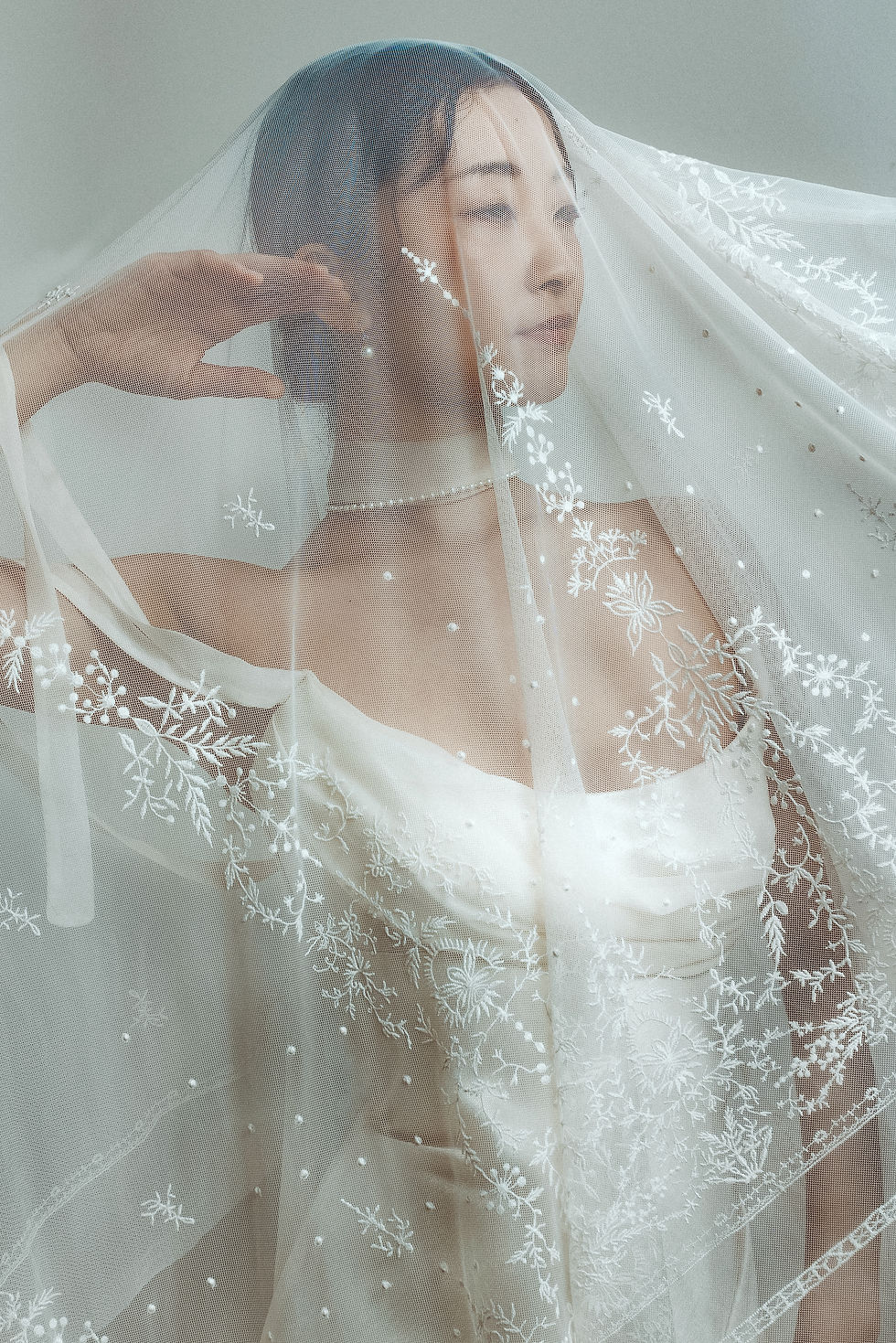
“Life outside ballet helps me become someone else on stage”
What inspires you outside ballet?
Outside of ballet, I like to feel grounded as I mentioned before. I enjoy spending time with friends, family, and my boyfriend. I am quite chill. I am not actively hunting for inspiration all the time.
Of course, everything that happens to me in life can inspire me as a dancer. But for me, feeling happy, safe and calm, is what actually opens me up to the world. I would say to be happy and calm is the biggest source of inspiration for me.
I am quite good at switching myself on and off. When I am in the studio and performing, I am on. But when I am off, I try to be completely off.
I used to think about ballet all the time outside the studio. I was always doing exercises, always watching other dancers, always thinking about ballet. I was afraid not to think about ballet. I thought I had to use all my time for it.
But through injury, and also through Covid, I learned to let go. I realized that if I enjoy my life more, I enjoy dancing more. That balance is very important for me.
Daily life also inspires me to acting on stage. I observe people a lot in the city. I like sitting in a café or being at a park and watching how children play, how people react, how they move, how they sit, talk, or use hand gestures. As dancers, we have to transform into many different characters: a young villager, an elder, a diva, a princess, or even someone evil.
I also watch many films by Hayao Miyazaki. His animation is easy for me to connect with, and it helps me to learn about human behaviour and expressions — how eyebrows move when someone is sad, how a child reacts when they are happy, how posture changes with emotions. I don’t watch those films to study ballet, but they give me ideas.
When I have to play a queen, for example, and I am not familiar with royal life, I go to museums or watch historical movies to see how people carried themselves and dressed back then.
But at the end of the day, I just try to live a happy life. That is my biggest motivation and inspiration.
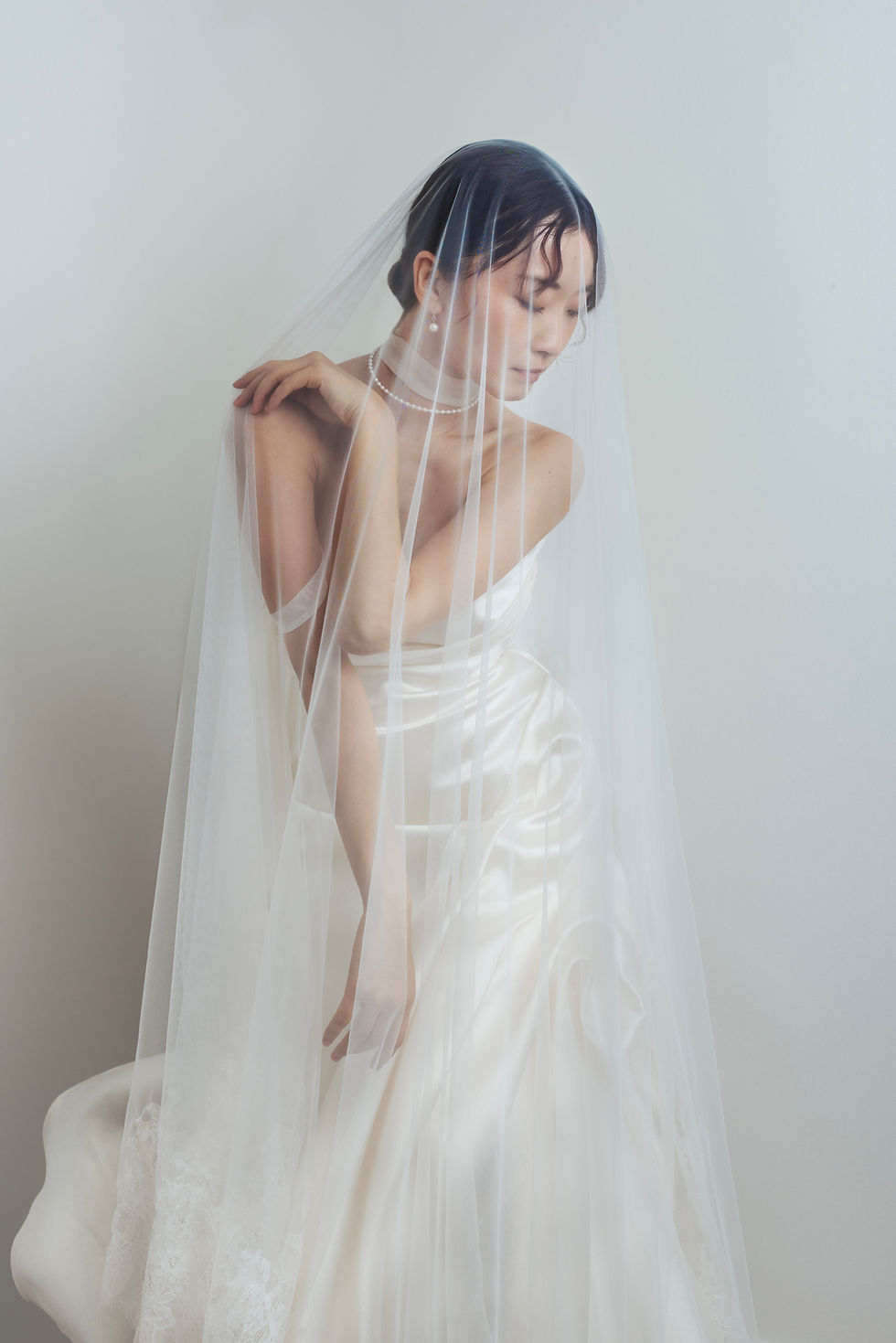
“I enjoy aging”
Do you feel that maturity changes the way you dance and live?
Yes. I really don’t mind aging, in fact I actually enjoy it. I am 32 now, and I am enjoying my life the most at this age.
In my thirties, I feel I have become much more peaceful. I worry less. I finally understand that nothing terrible will happen even if something goes wrong on stage or in life. You realise that you make your own life.
Experience is everything. These days, I realise that so many things that people told me in the past — things I couldn’t really understand back then — finally make sense after a few years of living through them. I think it really helps to experience things yourself and learn your own lessons in life. But at the same time I am much more open to listening to others now. I really enjoy talking to people with a wealth of experience and listening to their perspectives. I think maturity gives you true freedom.

Journalist: Julia Pneva, https://www.instagram.com/julia_pneva/
Photography by Camila Berrio, https://www.instagram.com/camila.berrio.photo/
Dresses by Atelier Lawenda Berlin, https://atelierlawenda.de/
We are grateful for our collaboration and for your support, Camila and Magda!
Comments