
Behind the Art Market: Olga Tynytska on Antiques, Art Dealing and the Search for Authenticity
Art historian and art dealer Olga Tinitskaya explains how to distinguish an authentic work of art from a forgery, why an unassuming object can be worth a fortune, and where to look for rare antiques today. In this interview, she takes us behind the scenes of million-euro auction deals, shares the secrets of art attribution, discusses her work with collectors and her first steps in the art market, and reveals why every valuable object holds not only a piece of art history but also a story of painstaking research and discovery.
About the Author
My name is Olga Tinitskaya. I am an art historian and public lecturer, with two degrees in art history (from the Kharkiv State Academy of Design and Arts, and I am currently completing my studies at Charles University in the History of Christian Art). Alongside my studies, I am taking specialist online courses in the attribution and appraisal of antiques in Moscow. I have been living in Prague since 2016.

For more than ten years, I have been involved in the antiques world in one way or another. I worked at a small branch of the Vltavín auction house and at Antiquariat Radhošt, an antique shop specialising in antiquarian books and prints. Today, I work with paintings, prints and decorative arts objects belonging to a fellow antiques dealer. My responsibilities include attribution, preparing descriptions, assessing market value and managing sales through my own channels. Essentially, this is the work of an art dealer — only for now, I am working within a partnership model and at the beginning of my career, without the capital required to purchase works independently.
Introduction: Antique Dealer vs. Art Dealer
Before answering the audience's questions, I would like to briefly explain the difference between two professions that are often treated as synonymous: an antique dealer and an art dealer.
In practice, the distinction between them is far from clear-cut, and many professionals combine both roles. Nevertheless, the emphasis of their work differs.
An antique dealer primarily works with historical objects. These may include furniture, porcelain, books, clocks, jewellery, decorative arts, as well as paintings and prints. Their task is to establish an object's authenticity, date and place of manufacture, condition, and historical and market value. Antique dealers also buy and resell antiques.
An art dealer specialises specifically in works of art. They act as a kind of intermediary in the art market — between an artist or the owner of an art object (a collector or gallery owner) and a buyer — representing the interests of both parties and acting as a guarantor of the transaction. For their services, dealers generally receive a commission incorporated into the price of the object. Beyond the transaction itself, they work more broadly within the art market: interacting with collectors, galleries, museums and auction houses, and monitoring price movements and artists' reputations.

My photograph from an archaeological field trip to Chersonesus, Crimea. I had just completed my first year at the Academy of Design and Arts.
Two markets are often distinguished here: the primary market, where art dealers work directly with contemporary artists and their new works, and the secondary market, which deals with existing works, often by Old Masters. It is the secondary market in which I intend to develop my career.
In practice, however, the boundary is even more blurred than it might seem. At major international fairs such as TEFAF, one can encounter art dealers who simultaneously sell decorative arts, books and jewellery — in other words, they work both as antique dealers and as art dealers in the strict sense. This further confirms that the boundaries between the professions are more conditional than rigid, especially in the fields of Old Master painting, prints and sculpture, where artistic value is inseparable from historical significance.
A similar logic applies to my own work: when I deal with decorative arts objects belonging to my colleague, I act as an antique dealer; when it comes to paintings and prints, I act as an art dealer.

Photograph from a live lecture in Prague
Can an object look cheap but actually be worth a fortune?
Yes, and this is one of the most common misconceptions among people unfamiliar with antiques. Intuitively, we tend to think that an expensive object must look luxurious — gilding, a large size, an elaborate shape. In reality, value is almost never something you can recognise at a glance. It is determined by rarity, condition, authenticity and, in the case of paintings and prints, provenance — factors that are only visible to someone who knows how to look for them.
There can be many examples. Let's take a hypothetical one: a modest wooden box without a single decorative element could be worth several times more than an elaborate gilded trinket if it is a rare example from a particular workshop or period, rather than a mass-produced item. Conversely, an impressive-looking object may turn out to be a later imitation with no genuine historical value.
That is precisely why the visual "wow factor" and market value are almost always two different things in the antiques world. One of the most important skills in this profession is learning not to confuse the two.

Antique French Gilt Spelter Mantel Clock, in the Historicist Style, 19th Century (c. 1870–1890)
How can you tell whether an antique is genuine if you don't know anything about antiques?
The short, honest answer is that, on your own, you almost can't — and that's perfectly normal.
The method differs depending on the type of object. When it comes to antiques such as furniture, tableware or jewellery, a direct physical examination is essential: hallmarks, assay marks, maker's marks, whether the style and material correspond to the claimed period, and the nature of wear and damage.
For paintings and prints, the signature, painting style, condition of the canvas or frame, craquelure, and labels from auction houses or private collections on the reverse are important. These may provide clues about the work's provenance.
In both cases, a beginner without experience should not rely on their own eye when making expensive purchases, but should seek an independent expert opinion.
Another common mistake is assuming that an object must be valuable simply because it bears an impressive date, such as 1800 or 1900. Age alone is far from the most important criterion. The final price depends on the edition or production run (whether the object was mass-produced or unique), the technique, condition and a whole range of other factors.
An old object is not necessarily rare, and certainly not necessarily expensive.
What is the most beautiful object you have ever held in your hands?
During what is still a relatively short professional career, I have had the opportunity to be around objects of museum quality. However, one particular experience remains especially vivid in my memory. It happened during my first years as a student at the Kharkiv State Academy of Design and Arts.
In our second or third year, we had a course on the fundamentals of antiques, taught by a practising specialist, Anatoly Alexandrovich Doluda.
That day, more than ten years ago, he brought a gold coin from the reign of Alexander the Great into our classroom — a stater dating to the 4th century BC. I remember him showing us the coin and even allowing us to hold it while wearing gloves. We examined the images on both sides — I can no longer remember whether they depicted Alexander the Great and Athena Parthenos, or Athena Parthenos and the winged goddess Nike.
Despite the coin's beauty and convincing appearance, our teacher told us it was a fake. Had it been an original, he said, he would apparently have valued it at around $50,000.
I no longer remember the details of the attribution — I believe there were questions about the depiction of Athena — but that story has stayed with me throughout my life and, in many ways, sparked my interest in authentic historical objects.
How do you organise your own exhibition? What should you pay attention to, and what is important not to forget?
This is a broad question, and similar principles apply to both antique and contemporary exhibitions.
Everything begins with the concept. An exhibition stops being merely a collection of objects in one space when it has a clear central idea: a thought, theme or story to which all the objects are connected, whether they are paintings, antiques or something else. Without this, even excellent objects, each considered individually, become visual noise.
Next comes the practical side, which beginners often underestimate: insurance, transportation and storage conditions. For antiques, humidity and temperature are important. The same applies to paintings, along with careful handling during transportation and installation. These are not minor details; neglecting them can physically damage a work.
And finally, there is the context provided for the viewer. It does not matter whether someone is looking at antiques or a contemporary art exhibition: without an explanation, a story or an idea behind the object, even the most valuable piece remains just an object to the uninitiated.
A good exhibition always explains to the visitor why they have come — it does not simply show things, but tells a story.
A list of vintage flea markets in Europe
To be honest, I would not yet call myself a specialist in vintage flea markets. I would rather speak about markets and fairs where antiques can be found, although vintage items are often available there as well.
Among the places I know personally, I can recommend Prague's U Elektry flea market. At weekends, people arrive very early — many vendors and regular buyers are already there by five in the morning, because the most interesting items are snapped up within the first few hours.
Several times a year, Prague also hosts an antiques fair where gallery owners and antique shop owners gather, many of whom belong to the Association of Antique Dealers of the Czech Republic. If you are interested specifically in quality antiques, this is a much more useful place than an ordinary flea market.
In addition, a market takes place in Buštěhrad a couple of times a month, where you can also come across interesting antique and vintage objects.
But I am sure that this list will become considerably longer in the near future. I myself plan to travel more around European markets, auctions and antique shops, and I will certainly share my discoveries.

The Antique Shop in Prague Where I Used to Work
Is the search for rare objects routine or an adrenaline rush?
At the moment, my work is organised somewhat differently. I work with objects that come to me through colleagues: I photograph them, research them, refine their attribution, compare them with similar works at international auctions, prepare descriptions and oversee the sales process.
There is certainly an element of excitement — it simply comes from the routine itself. The more objects pass through your hands, the more your eye becomes trained, and the better you become at noticing details that you might previously have overlooked.
I also had a different kind of experience: I watched someone close to me buying objects and inevitably became emotionally involved in the process. I would wonder how much a particular item would eventually sell for and follow the proceedings almost as if it were my own purchase.
That was when I first experienced this excitement from the inside, even before I began working professionally in the field myself.
What is the strangest or most difficult task you have faced from collectors?
A couple of years ago, an acquaintance asked me to help attribute a violin that had belonged to her grandfather. He claimed that it was a Stradivarius.
Although, as an art historian, I immediately suspected it was a fake, I conducted my own small investigation to confirm this suspicion. According to the woman, quite a few people had expressed an interest in buying the instrument over the years, even though the violin had been in her family for a long time.
To summarise briefly, with 99% certainty, it was not even a high-quality Stradivarius copy. The market for musical instruments of this calibre has been studied so thoroughly that all the originals and copies, as well as the names of their owners, have long been known and documented.
The main difficulty was that the violin was not located in Europe. With musical instruments, photographs alone are almost never sufficient. For a proper assessment, the instrument needs to be examined in person by a specialist in musical instruments.
Another genuinely difficult case took place in Kharkiv about nine years ago. Through acquaintances, I was asked to help attribute and sell a carved 19th-century bone mug.
The main difficulty lay in several circumstances. First, the object had a noticeable crack that significantly affected its market value. Second, the owner did not want to submit the mug to specialist experts for an in-person examination, so I had to assess it using photographs alone, which is insufficient for serious attribution.
Furthermore, the owner was guided by the highest prices they could find online, without taking into account the object's condition or the absence of a confirmed attribution.
I can say that this situation is very common among people who are not specialists. It was then that I first encountered just how much actual market prices can differ from owners' expectations, and how important independent expertise and an objective assessment of an object's condition really are.

Carved Ivory Mug in the Historicist Style
What matters more for an art dealer: being an art historian, or is it primarily about business?
This is a false dichotomy, and that is precisely my personal position: without an art-historical foundation, it is physically impossible to assess an object, and there is a risk of buying or selling blindly. Without business acumen, however, even the most accurate expertise will not turn into a sustainable business.
The ideal art dealer possesses both: depth of knowledge and commercial pragmatism.
I would also like to say something to beginners: without systematic work with catalogues and monographs, and without developing an eye through hours spent examining authentic objects and their attributions in professional literature, you cannot learn this profession.
It is a skill developed through working with your hands and eyes, not simply through explanations from someone else.
Where should someone start if they want to buy their first antique at auction?
It is worth starting with a small auction house rather than going straight to Sotheby's. The entry barriers are lower, and the atmosphere is more welcoming to beginners.
The practical steps are simple: register in advance, study the catalogue, and be sure to examine the object in person or request detailed condition photographs before the sale. Do not rely solely on the online description.
There is no dress code at most auctions; they are not an exclusive club. Ordinary, neat clothing is perfectly appropriate.
As for the budget, it is sensible to start with an amount you can psychologically afford to lose while learning through practical experience. At major auction houses, you can find lots priced at just a few hundred euros.
How can you be sure that the object you have purchased is not a fake?
There is no absolute guarantee, even for professionals. However, the risk can be significantly reduced by buying through reputable, established auction houses (which are accountable for their attributions), requesting provenance documentation and, for genuinely valuable objects, commissioning an independent expert assessment before purchasing rather than afterwards.
For particularly significant works of art, researchers increasingly examine not only the object itself but also its history of ownership and circulation — its provenance — since provenance often becomes one of the key factors in establishing authenticity.
How does an art dealer manage to know everything? On catalogues, databases and professional specialisation
Of course, it is impossible to know everything about every work of art in the world.
An expert or dealer's strength does not lie in memorising every date and name, but in knowing where to find the necessary information and how to compare facts with one another.
For paintings and prints, the main tool is the Catalogue Raisonné — an academic, multi-volume publication documenting all the authenticated works by a particular artist.

Before the internet, an expert's work often involved a kind of archival seclusion: specialists would spend years corresponding with museums and checking paper catalogues of hallmarks and maker's marks.
Today, enormous databases such as Artnet, Artprice and the Art Loss Register help with this work. However, the physical examination of an object and knowledge of a master's distinctive artistic "hand" remain irreplaceable.
This is precisely why specialisation is critically important in the market: universal experts do not exist. Someone may spend their entire career assessing only violins, another person may specialise in porcelain from a particular manufactory, while someone else focuses on Old Master prints.
For example, my own focus is on European prints, antiquarian books and art created before the beginning of the 20th century.
Is it still possible to find something genuinely valuable at a flea market today?
It depends on what you mean by a "masterpiece".
When you ask about finding something at a market, do you mean an unknown painting by Caravaggio, or a rare Art Nouveau brooch? These are fundamentally different categories, and that is where the conversation should begin.

If we are talking about high-quality printed graphics from the 18th to the 20th centuries, old manuscript books or objects by renowned designers, then yes, it is entirely possible — particularly at French and Italian flea markets, which have historically remained one of the sources for this market.
Non-professionals sometimes sell valuable prints or rare editions for next to nothing simply because, to them, they look like "old dusty paper".
But if we are talking about Old Master paintings of such calibre that they could genuinely change the market, then such works are practically never encountered in open sales today.
According to the experience of my colleagues, genuinely rare and important objects are more often found in people's homes than at markets. Antique dealers discover them while conducting house clearances and buying objects directly from owners.
One of my colleagues once told me how, at the request of a private homeowner, he and a partner discovered rare French books from the 1800s, printed in limited editions. These books still attract interest in today's antiquarian book market.
The Most Expensive Old Master Sales: What Do These Figures Mean to the Average Person?
Absolute auction records at official auctions:
Leonardo da Vinci — Salvator Mundi (c. 1500): $450.3 million, Christie's, New York, November 2017 — the absolute record for any work of art in the world

Sandro Botticelli — Portrait of a Young Man Holding a Roundel (c. 1480): $92.2 million, Sotheby's, January 2021

Peter Paul Rubens — The Massacre of the Innocents (1611–1612): $76.5 million (£49.5 million), Sotheby's, 2002

Raphael — Head of a Young Apostle (c. 1519–1520): $47.8 million, Sotheby's, December 2012

Major private transactions on the secondary market:
Rembrandt — the paired portraits of Maerten Soolmans and Oopjen Coppit (1634): €160 million (approximately $180 million), jointly acquired by the Louvre and the Rijksmuseum in 2016. This was a private transaction, not a public auction.

Caravaggio (attributed) — Judith Beheading Holofernes: discovered in an attic in France in 2014 and purchased privately immediately before its scheduled auction in 2019 for an undisclosed sum. The pre-auction estimate had reached €150 million. The attribution is still disputed by some experts.

Paul Cézanne — The Card Players (1892–1893): approximately $250 million, private sale in 2011 to the Qatari royal family

Willem de Kooning — Interchange (1955): $300 million, private sale in 2015 to Kenneth C. Griffin
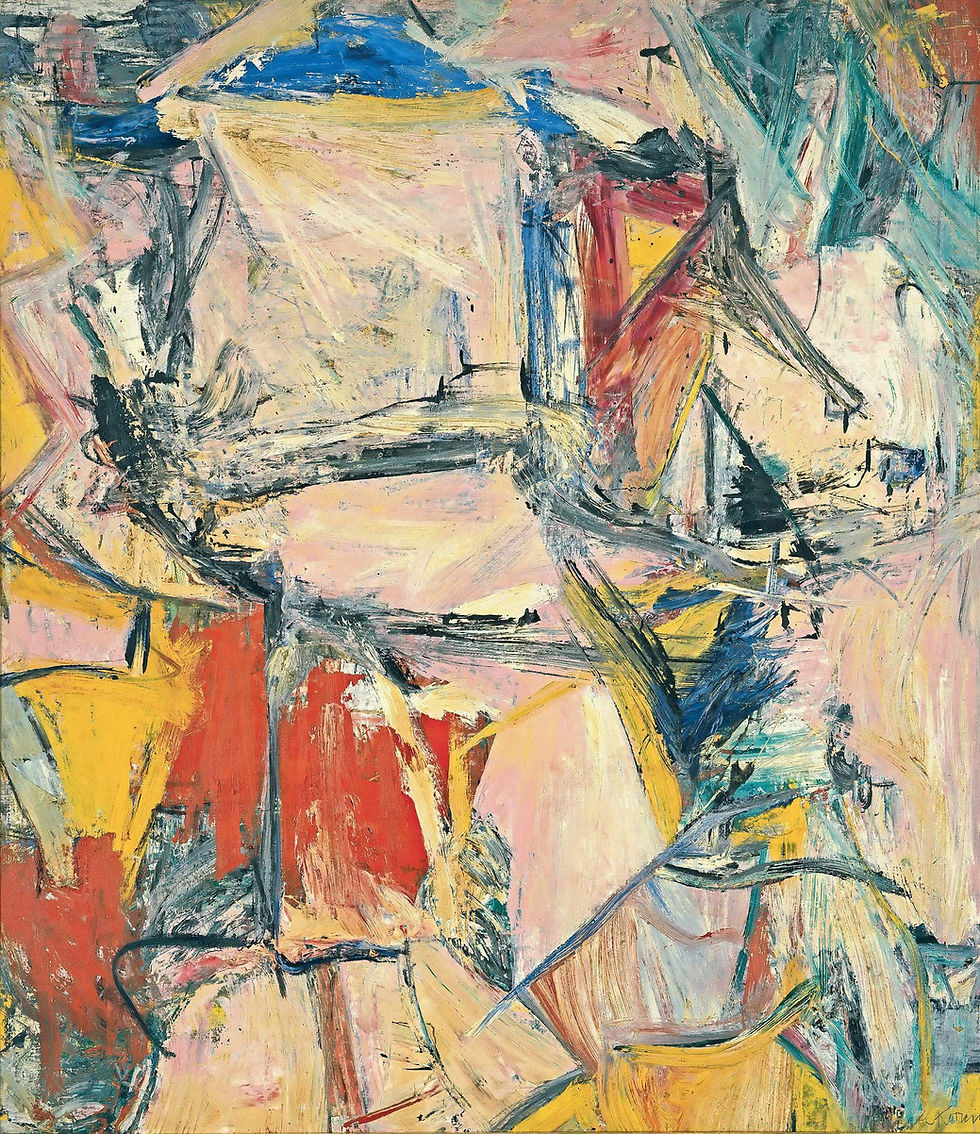
To the average person, such figures seem absurd, especially when it comes to paintings darkened by time.
But the value of Old Masters lies in the fact that they are a finite, irreplaceable resource. New paintings by contemporary artists will be created every day, but Rembrandt, Botticelli and da Vinci will never paint another one. When purchasing such a work, a collector acquires not merely a canvas, but a tangible fragment of history — a moment when humanity was rediscovering the universe. Essentially, it is a purchase of the status of a "guardian of eternity".
Cinema vs. Reality: Why Does Art Dealing Look More Glamorous on Screen Than It Is in Real Life?
Cinema loves to romanticise our field.
In television series such as Charmed (where Prue Halliwell worked at the Buckland's auction house — an obvious reference to Christie's or Sotheby's), or in the film The Best Offer, the work of an art dealer is always surrounded by mystery, curses and sudden discoveries.
In reality, everything is far more mundane, but in its own way, more dramatic.
Films almost never show the months of routine archival research, legal disputes over provenance or lengthy expert examinations.
But the filmmakers are right about one thing: an auction is pure theatre.
It is a psychological battle of bids, where millionaires compete with a slight nod of the head or a movement of an eyebrow, while a dealer in the room or on the telephone represents an anonymous buyer, maintaining absolute composure as the price rises by millions in a matter of seconds.
The real drama of the art market remains hidden from outsiders — but it keeps you on the edge of your seat more than any screenplay.

Journalist: Julia Pneva
Comments